Introduction
Across the world, women’s empowerment continues to shape stronger families, healthier communities, and more resilient economies. When women gain access to education, skills, and opportunities, they become active contributors to social and economic progress. Their participation creates positive changes that extend far beyond individual success. Communities benefit from increased productivity, improved living standards, and stronger support systems.
Today, women’s empowerment is no longer viewed as a social objective alone. It has become an economic necessity. Countries that invest in women’s education, skills development, and economic empowerment often experience sustainable growth and reduced poverty levels. In Pakistan, thousands of women still face barriers that limit their ability to achieve financial independence. However, expanding access to learning opportunities and vocational training continues to create new pathways toward a brighter future.
What Is Women’s Empowerment and Why Does It Matter?
Understanding the Meaning of Women’s Empowerment
At its core, women’s empowerment refers to enabling women to make informed choices about their lives, careers, education, and future. It involves strengthening confidence, increasing access to opportunities, and ensuring participation in decision-making processes. True empowerment extends beyond financial stability. It includes social empowerment, education, and the freedom to pursue personal and professional goals.
Moreover, women’s empowerment plays a critical role in creating balanced societies. When women participate equally in education, employment, and leadership, communities become more innovative and productive. Research consistently shows that investing in women leads to higher household incomes, better educational outcomes for children, and stronger local economies.
| Key Areas of Women Empowerment | Impact |
| Education | Improved knowledge and opportunities |
| Employment | Increased financial independence |
| Leadership | Greater community participation |
| Skills Development | Sustainable income generation |
| Entrepreneurship | Economic growth and innovation |
The Current Challenges Women Face in Pakistan
Barriers That Limit Opportunities
Despite progress, many women continue to encounter obstacles that limit their advancement. Limited access to quality education remains a significant challenge, especially in rural regions. Many families struggle with financial constraints, making it difficult for girls to continue their studies beyond primary school. This educational gap often affects future employment opportunities and earning potential.
Furthermore, employment barriers, cultural expectations, and financial dependency continue to restrict women’s participation in the workforce. Rural women often face additional difficulties due to limited infrastructure and fewer training opportunities. These challenges highlight why women empowerment programs, women development initiatives, and community support programs remain essential for long-term progress.
How Education Creates Long-Term Empowerment
Why Learning Changes Generations
Education serves as the foundation of women’s empowerment. A woman who receives quality education gains the ability to make informed decisions, access better employment opportunities, and contribute meaningfully to society. More importantly, education often creates a ripple effect that benefits future generations. Educated mothers are more likely to prioritize healthcare, nutrition, and schooling for their children.
Beyond academics, education builds confidence and strengthens leadership abilities. It encourages critical thinking and expands awareness of personal rights and opportunities. As a result female education in Pakistan, and educational empowerment continue to be among the most effective tools for reducing inequality and promoting social development.
“When you educate a woman, you educate a family. When you empower a woman, you strengthen a community.”
Skills Development as a Path to Financial Independence
Practical Skills That Create Income
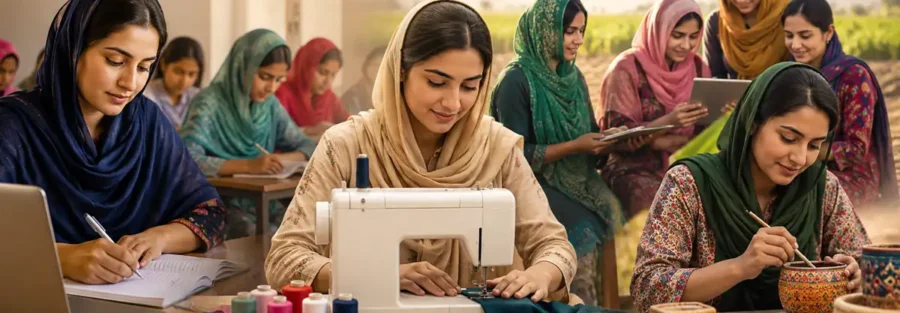
While education in Pakistan lays the groundwork, practical skills often create immediate economic opportunities. Many successful women’s empowerment programs focus on vocational training because it equips women with marketable abilities that can generate income quickly. Skills such as tailoring, sewing, handicrafts, digital literacy, and entrepreneurship provide pathways toward financial independence.
In many communities, vocational training for women has transformed lives by enabling participants to start small businesses or secure stable employment. These opportunities increase self-reliance and reduce economic vulnerability. As women gain valuable skills, they become active contributors to household income and community development.
| Skills Development Area | Potential Outcome |
| Sewing and Tailoring | Home-based business |
| Digital Skills | Freelancing opportunities |
| Handicrafts | Small-scale entrepreneurship |
| Financial Literacy | Better money management |
| Business Training | Sustainable income growth |
The Link Between Women’s Empowerment and Poverty Reduction
Breaking the Cycle of Poverty
One of the strongest arguments for women’s empowerment lies in its direct impact on poverty reduction. When women earn income, they often invest in their families’ well-being. This includes better nutrition, healthcare, housing, and education. Such investments create lasting improvements that benefit entire communities.
Additionally, the economic empowerment of women contributes to national development. Women who participate in the workforce help expand local economies and create new opportunities for growth. As more women achieve financial independence, poverty rates decline, and economic resilience improves.
Women’s Empowerment Through Entrepreneurship
From Skills to Sustainable Businesses
Entrepreneurship has emerged as a powerful vehicle for women’s economic empowerment. Many women transform acquired skills into successful enterprises that support their families and create employment opportunities for others. Home-based businesses, online stores, and service-based ventures continue to grow across Pakistan.
Equally important is financial literacy. Understanding budgeting, saving, investment, and business planning helps women manage resources effectively. Successful entrepreneurship depends not only on technical skills but also on informed financial decisions. Therefore, modern women’s empowerment initiatives increasingly combine skills training with financial education.
How Empowered Women Strengthen Families
Benefits Beyond Income
The benefits of women’s empowerment extend far beyond financial gains. Empowered women often become advocates for education, healthcare, and social progress within their communities. Their increased confidence enables them to participate in community discussions and contribute to important decisions that affect family well-being.
Furthermore, children raised in empowered households tend to perform better academically and enjoy improved health outcomes. Studies consistently demonstrate that women who control financial resources are more likely to invest in their children’s future. This creates a positive cycle of growth that benefits multiple generations.
The Role of NGOs and Community Organizations
Supporting Women Through Local Programs
Across many developing regions, women’s empowerment often begins at the community level. Local organizations understand the challenges women face and can provide practical solutions that fit local needs. Through women empowerment programs, mentorship initiatives, and vocational training, NGOs help women gain the confidence and skills required to improve their lives. These programs frequently focus on skills development, women’s education, and economic opportunities that create lasting change.
Organizations that invest in community development often achieve results that extend beyond individual participants. When women gain access to training and support networks, they become catalysts for progress within their families and neighborhoods. Many successful programs combine education, leadership development, and entrepreneurship training to create sustainable pathways toward financial independence for women.
Success Stories of Women’s Empowerment
Real Transformations Through Skills and Education
Behind every successful empowerment program lies a story of transformation. Consider a woman who once relied entirely on family support but later completed vocational training and launched a small tailoring business. Through determination and acquired skills, she generated a stable income, supported her children’s education, and became a respected contributor to her community. Such stories demonstrate how women’s empowerment through vocational training creates measurable change.
Another example involves women who gain access to digital learning opportunities. After completing online skills programs, many begin freelance careers or remote work positions. These opportunities allow them to earn independently while balancing family responsibilities. Such experiences highlight the growing importance of economic empowerment of women through modern education and technology.
| Empowerment Activity | Potential Long-Term Impact |
| Vocational Training | Sustainable income generation |
| Entrepreneurship Programs | Small business ownership |
| Digital Skills Training | Remote employment opportunities |
| Financial Literacy Education | Better financial decisions |
| Leadership Development | Community participation |
Emerging Opportunities for Women in the Digital Economy
A Topic Most Competitors Miss
While traditional vocational training remains valuable, the digital economy has created entirely new opportunities for women’s empowerment. Today, women can earn income through freelancing, virtual assistance, content creation, graphic design, online tutoring, and e-commerce. These opportunities require fewer physical resources and often allow women to work from home.
Additionally, digital literacy is becoming an essential skill for future success. Women who understand technology gain access to broader markets, educational resources, and employment opportunities. As internet access expands, women’s entrepreneurship increasingly includes online businesses that connect local talent with global customers. This shift represents one of the most promising developments in modern women’s empowerment.
Why Financial Literacy Is Just as Important as Skills
Building Sustainable Financial Independence
Learning a skill is valuable. However, understanding how to manage income is equally important. Many women can earn money but struggle to save, budget, or invest effectively. This is where financial literacy becomes a critical component of women’s empowerment programs. Women who understand financial planning are better equipped to make informed decisions and build long-term stability.
Furthermore, financial literacy supports entrepreneurship. Business owners must understand pricing, budgeting, record keeping, and cash flow management. These skills help women avoid common financial mistakes and create stronger foundations for growth. Combining vocational training with financial education produces more sustainable results than skills training alone.
| Financial Literacy Skill | Benefit |
| Budgeting | Better money management |
| Saving | Emergency preparedness |
| Business Planning | Sustainable growth |
| Investment Awareness | Wealth creation |
| Financial Goal Setting | Long-term stability |
The Future of Women’s Empowerment in Pakistan
Trends and Opportunities
Looking ahead, the future of women’s empowerment in Pakistan appears increasingly connected to education, technology, and entrepreneurship. Governments, NGOs, educational institutions, and private organizations continue to invest in programs that promote women’s development, skills development, and economic inclusion. These efforts are creating new opportunities for women across both urban and rural communities.
At the same time, the growing demand for digital skills is opening doors that were previously unavailable. Women who gain access to training, mentorship, and technology can participate in global markets without leaving their communities. As these opportunities expand, women empowerment initiatives in Pakistan will play an even greater role in reducing poverty, strengthening families, and driving economic growth.
Frequently Asked Questions About Women’s Empowerment
What is women’s empowerment?
Women’s empowerment refers to providing women with the knowledge, skills, opportunities, and confidence needed to make independent decisions and participate fully in social, economic, and political life.
Why is women’s empowerment important?
Women’s empowerment promotes gender equality, reduces poverty, strengthens communities, and improves educational and health outcomes for families. Empowered women contribute significantly to economic growth and social development.
How does education empower women?
Education increases knowledge, confidence, critical thinking, and employment opportunities. It enables women to make informed decisions and achieve greater financial independence.
What skills help women become financially independent?
Skills such as tailoring, digital literacy, entrepreneurship, financial management, marketing, communication, and vocational training can help women generate income and build sustainable careers.
How do NGOs support women’s empowerment?
NGOs support women’s empowerment by providing training programs, educational opportunities, mentorship, financial literacy workshops, entrepreneurship support, and community development initiatives that help women achieve self-reliance.
Conclusion
The journey toward women’s empowerment is not limited to improving individual lives. It creates stronger families, healthier communities, and more resilient economies. Through education, skills development for women, entrepreneurship, and financial literacy, women gain the tools needed to overcome barriers and achieve lasting independence.
As opportunities continue to expand, particularly in the digital economy, the potential for transformation becomes even greater. Investing in women’s empowerment programs, women’s education, and the economic empowerment of women remains one of the most effective ways to create sustainable development. When women thrive, families prosper, communities grow stronger, and entire nations move closer to a more equitable and prosperous future.