Introduction
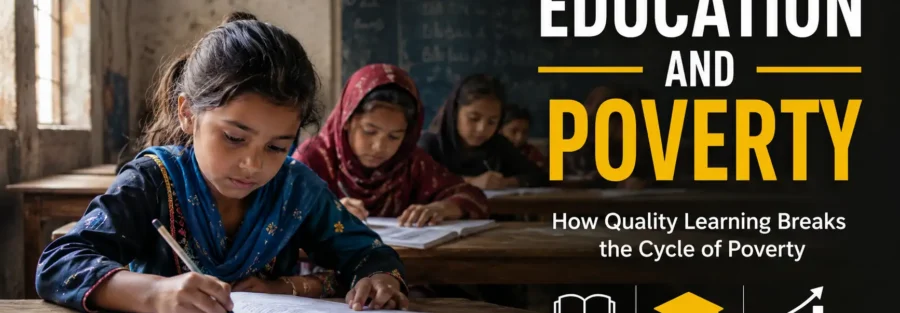
Poverty limits opportunities, yet education has the power to change that reality. Education and poverty are closely connected because quality learning gives people the knowledge, confidence, and practical skills needed to build better lives. Education doesn’t only increase earning potential. It also strengthens quality education in Pakistan, financial independence, and community development, helping individuals make informed decisions that improve their future. When children receive the right education, they gain hope, develop resilience, and discover opportunities that poverty often hides.
Around the world, millions of children face barriers caused by limited educational access. However, education changes life and remains one of the most effective long-term solutions to poverty because it creates lasting change instead of temporary relief. Learning develops confidence, supports employment opportunities, and encourages lifelong growth. More importantly, education empowers families and communities by giving every child the chance to build a brighter future through knowledge rather than circumstance.
What Is the Relationship Between Education and Poverty?
The relationship between education and poverty is simple yet powerful. Poverty often prevents children from accessing quality education, while limited education makes it harder to escape poverty later in life. This creates a continuous cycle where children grow up with fewer opportunities, lower literacy levels, and limited employment prospects. Understanding this connection helps explain why improving education is one of the most sustainable ways to reduce poverty across generations. Strong educational opportunities, educational equality, and accessible learning create pathways toward long-term success.
Although these terms are sometimes used together, they describe different challenges. Poverty in education refers to barriers that prevent children from attending or succeeding in school, such as financial hardship, lack of transportation, or limited learning resources. Educational poverty, however, describes situations where children attend school but still fail to gain essential knowledge and skills because of poor-quality learning. Quality education changes this outcome by replacing limitations with opportunity, helping children develop confidence, practical abilities, and hope for the future.
Why Education Is One of the Most Powerful Tools Against Poverty
Education does far more than prepare children for examinations. It equips them with the knowledge, confidence, and life skills needed to overcome obstacles throughout life. Education and poverty are closely connected because education improves decision-making, expands employment opportunities, and encourages financial independence. Children who receive quality education are more likely to continue learning, secure meaningful work, and contribute positively to their families and communities. Strong lifelong learning, social mobility, and future opportunities begin with access to education.
Another important benefit is the ability to make informed choices. Education helps people understand health, finances, technology, and civic responsibilities, allowing them to build stable and productive lives. It also promotes equal opportunities by reducing barriers created by poverty, discrimination, and inequality. Instead of simply treating the effects of poverty, education addresses many of its root causes by creating informed individuals who can adapt, innovate, and build stronger futures for themselves and those around them.
How Poor Education Keeps Families Trapped in Poverty
Poor education creates challenges that often continue from one generation to the next. When children cannot access quality learning or leave school too early, they may struggle to develop the skills needed for stable employment and financial independence. This strong connection between poor education and poverty limits opportunities, reduces literacy, and makes it harder for families to improve their living conditions. As a result, poverty becomes a repeating cycle instead of a temporary hardship. Strong educational access, literacy, and quality education are essential for breaking this pattern.
The effects of poor education reach far beyond income. Limited knowledge can affect health decisions, financial planning, and confidence, making everyday challenges even harder to overcome. Children who miss educational opportunities are also more likely to face school dropout, child labour, and lower-paying jobs later in life. Improving education doesn’t simply increase earnings. It creates informed individuals who make better choices and build stronger futures for their families and communities.
| Poor Education | Long-Term Effect |
| Low literacy | Limited employment opportunities |
| School dropout | Lower lifetime income |
| Child labour | Lost educational opportunities |
| Limited skills | Financial instability |
| Poor awareness | Poor health and life decisions |
Education Creates Opportunities Beyond Higher Income
Although higher income is an important benefit, education creates value in many other ways. Education and poverty are closely linked because education strengthens confidence, improves communication, and encourages thoughtful decision-making. Children learn how to solve problems, work with others, and adapt to new situations. These abilities remain valuable throughout life, helping them succeed at school, in the workplace, and within their communities. Developing critical thinking, communication skills, and problem-solving skills prepares children for challenges that money alone cannot solve.
Education also shapes character by encouraging responsibility, resilience, and leadership. Children who receive quality education become more confident in expressing ideas, respecting different perspectives, and making informed decisions. These personal qualities support healthy relationships, responsible citizenship, and lifelong learning. Instead of measuring success only by salary, education should also be valued for helping people become capable, independent individuals who contribute positively to society.
Education Builds Confidence Before It Builds Careers
Confidence often grows long before a career begins. Every lesson learned, challenge overcome, and goal achieved helps children believe in their own abilities. That self-belief encourages curiosity, persistence, and ambition, allowing them to pursue greater opportunities with determination. Strong confidence becomes the foundation for future success because children who trust their abilities are more willing to continue learning, embrace new experiences, and build meaningful careers.
Why Early Education Helps Prevent Future Poverty
The earliest years of learning have a lasting influence on a child’s future. Early childhood education supports brain development, language skills, and social growth during the most important stage of development. Children who begin learning early are more likely to perform well in school, complete their education, and develop habits that support lifelong success. Investing in early childhood education in Pakistan, child development, and school readiness creates opportunities that continue into adulthood.
Early learning also helps prevent many of the challenges associated with poverty before they become long-term problems. Children develop confidence, curiosity, and strong learning habits that prepare them to overcome future obstacles. These early experiences encourage better academic performance, improved communication, and stronger problem-solving abilities. By giving children a positive start, education becomes one of the most effective long-term strategies for reducing poverty and creating lasting opportunities.
Digital Skills Help Reduce Modern Poverty
Technology has changed the way people learn, work, and earn a living. Today, education and poverty are connected not only through traditional schooling but also through digital access and modern skills. Children who develop digital literacy can explore online learning, improve communication, and gain knowledge that prepares them for future careers. Building digital literacy, educational opportunities, and career readiness helps children compete in a world where technology continues to shape education and employment.
Access to digital education also reduces learning gaps for children living in underserved communities. Online courses, educational platforms, and AI-powered learning tools allow students to continue learning beyond the classroom. Although technology cannot replace teachers, it expands educational access and encourages lifelong learning. By combining quality education with digital skills, children become better prepared for changing workplaces and future economic opportunities.
How Families, Schools, and Communities Reduce Poverty Together
Reducing poverty through education requires more than schools alone. Parents encourage children to value learning, teachers build knowledge and confidence, while community organizations provide additional support that keeps education accessible. Strong partnerships create an environment where children receive encouragement both inside and outside the classroom. Through educational support, community development, and positive mentorship, children are more likely to remain engaged in learning and achieve long-term success.
A meaningful example is God’s Little Angels, which supports children’s education by providing learning resources, mentoring, school enrollment assistance, and a caring environment that encourages continuous learning. By working alongside families, schools, and local communities, organizations like God’s Little Angels help remove educational barriers without replacing the role of parents or teachers. If you’d like to help children continue learning, you can Sponsor a Child Education and support their journey toward a brighter future. These partnerships strengthen educational opportunities and create lasting benefits for children and their communities.
Education Creates Generational Change
One educated child can influence far more than a single future. Education and poverty are closely connected because education creates positive changes that continue across generations. Children who receive quality education often support their families, encourage younger siblings to remain in school, and later provide better educational opportunities for their own children. This continuous cycle strengthens families, improves local communities, and contributes to long-term economic and social development. Strong social mobility, future opportunities, and financial independence begin with access to learning.
Generational change happens gradually, yet its impact is remarkable. As education spreads within families, healthier decisions, improved financial planning, and greater community participation become more common. Instead of poverty being passed from one generation to the next, education creates a new cycle built on knowledge, opportunity, and hope. This lasting transformation demonstrates why investing in education benefits not only individuals but society as a whole.
Breaking the Poverty Cycle Starts with One Child
Every lasting change begins with a single opportunity to learn. When one child gains access to quality education, that knowledge often reaches parents, siblings, friends, and future generations. Over time, one educated child can inspire many others to value learning, pursue better opportunities, and contribute to stronger communities. This ripple effect makes education one of the most powerful long-term solutions to poverty.
Frequently Asked Questions
What is the relationship between education and poverty?
Education and poverty are closely connected because limited access to quality education often leads to fewer employment opportunities and lower income. Quality education helps people develop the skills needed to improve their lives and reduce poverty over time.
How does education reduce poverty?
Education reduces poverty by improving literacy, strengthening practical skills, increasing employment opportunities, and helping individuals make informed financial and personal decisions that lead to greater independence.
Why does poor education increase poverty?
Poor education limits knowledge, confidence, and career opportunities. As a result, individuals may struggle to secure stable employment, increasing the likelihood that poverty continues across generations.
Can education end poverty?
Education alone cannot eliminate every cause of poverty, but it is one of the most effective long-term solutions. When combined with supportive communities, equal opportunities, and economic development, education plays a vital role in reducing poverty.
Why is quality education important?
Quality education equips children with knowledge, life skills, confidence, and critical thinking abilities that prepare them for meaningful careers, responsible citizenship, and lifelong learning.
Conclusion
Education is one of the strongest foundations for lasting social and economic progress. Education and poverty remain closely linked because learning opens doors to knowledge, confidence, employment, and opportunity while reducing the barriers that keep families trapped in hardship. Every child who receives quality education gains the chance to build a more secure future through practical skills, informed decision-making, and lifelong learning.
Breaking the cycle of poverty requires a shared commitment from families, schools, communities, and organizations that believe every child deserves the opportunity to learn. By expanding quality education, encouraging educational equality, and creating pathways for lifelong growth, society invests in stronger families, healthier communities, and future generations equipped to create lasting positive change.